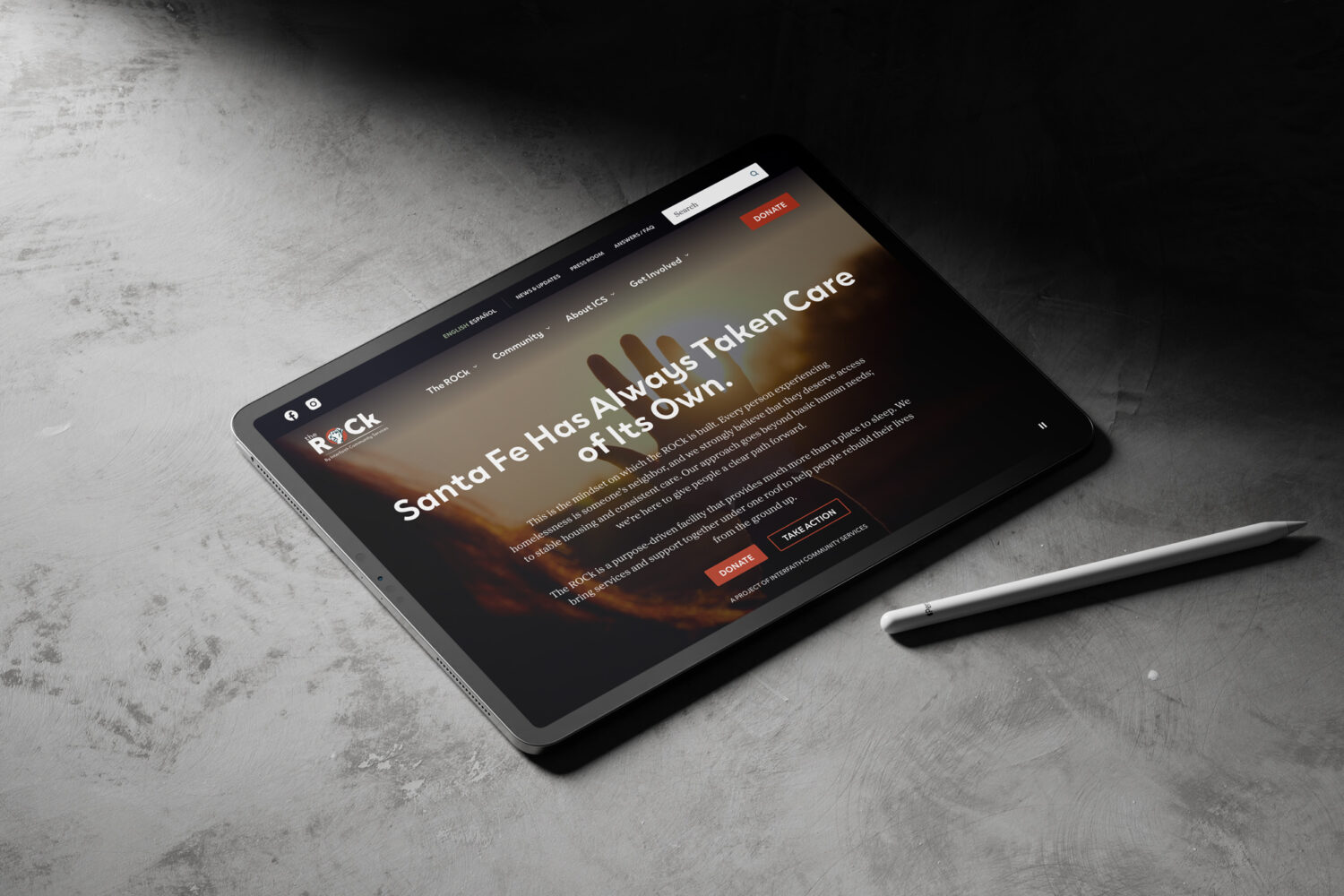
Interfaith Community Services is a Santa Fe nonprofit that runs emergency shelter, mobile hygiene and showers, senior motel housing, and a community closet. Its flagship project, The ROCk, takes its name from Resource and Opportunity Center, and it is the largest undertaking in the organization’s history. I designed and developed therocksantafe.org, the site for both the organization and the campus, and it launched in August 2026.
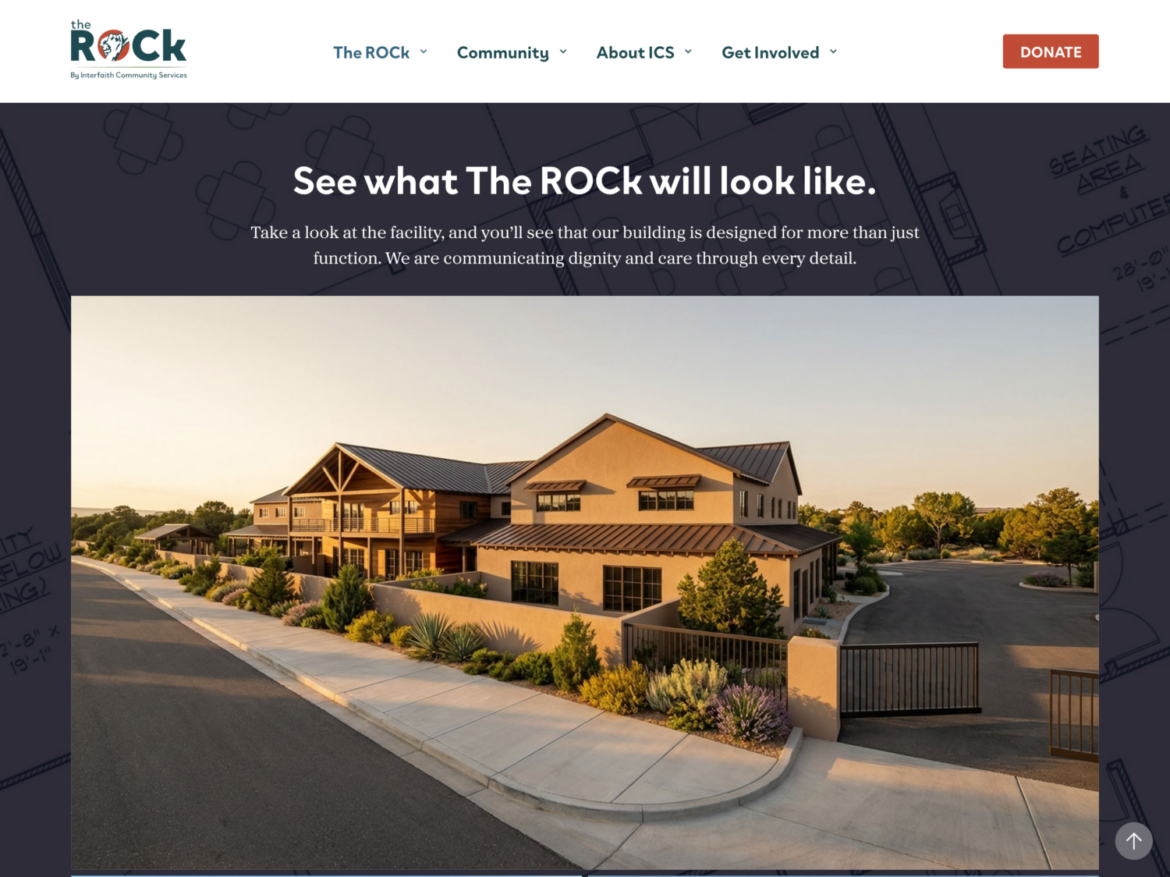
The campus does not exist yet, and that is the whole design problem. The site had to introduce a $16 million campus on Emblem Road, bringing 125 emergency beds and day services together in one place, to four audiences arriving at once: neighbors with questions, donors deciding whether to fund it, reporters who had been covering the debate in the local papers for a year, and the people the campus will serve. Making the case was the job, not describing a building.
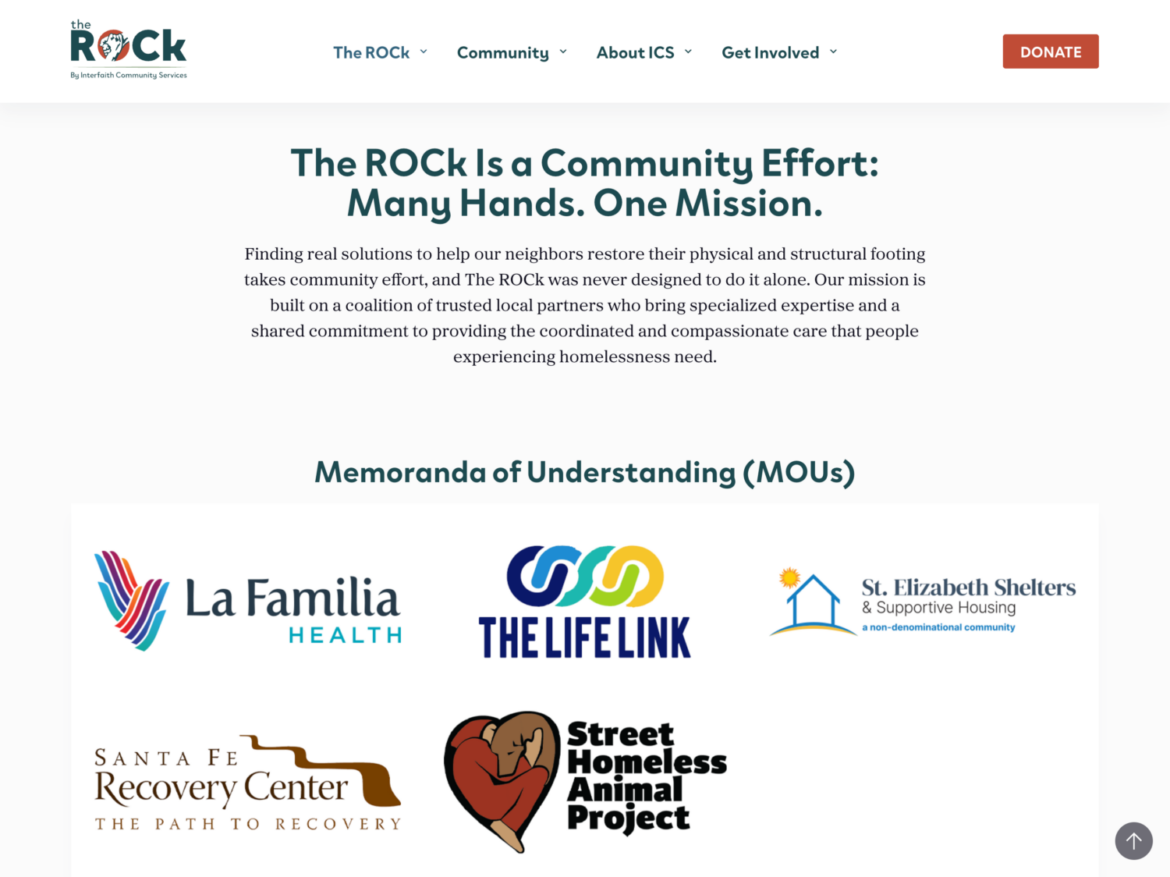
The central structural problem is that one site has to carry two different things without blurring them. ICS is a working nonprofit with programs running today, and someone who needs a shower or a bed tonight should not have to read about a construction project to find one. The second thing, The ROCk, is a campus under construction that needs a case made for it. Seventeen contracted page areas were mapped so both stories stay legible side by side, each reachable on its own terms.
I built the site on WordPress using a modern, fast, accessible, block-based theme with a child theme and a global style system, applying the ICS and The ROCk brand system Cisneros Design created. Roughly 26 pages went live across those page areas, with further pages built and held for a later release. Four custom post types carry the content model: campaigns, partners, leadership, and map locations. The whole build ran on a password-gated review site with per-person client accounts, alongside a weekly call with ICS leadership and their PR agency.
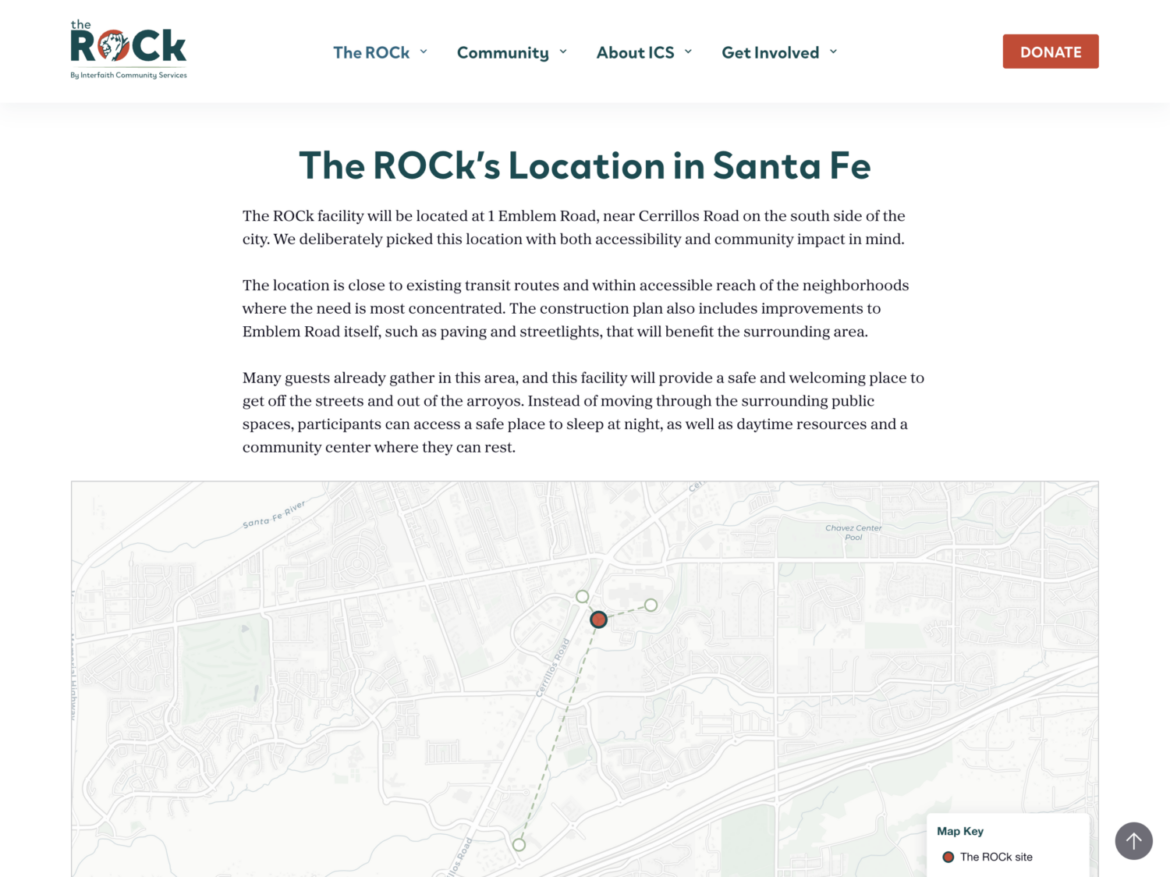
The standout custom piece is the interactive property map. It is a bespoke Leaflet and OpenStreetMap build with its own data layer, a custom REST endpoint, and a shortcode, backed by a custom post type so staff can add and edit pins without a developer. Zoom is disabled and the pins are curated, both on purpose. The map is not a general-purpose wayfinder. It is an argument about proximity, showing what the campus already sits near with the distances spelled out.
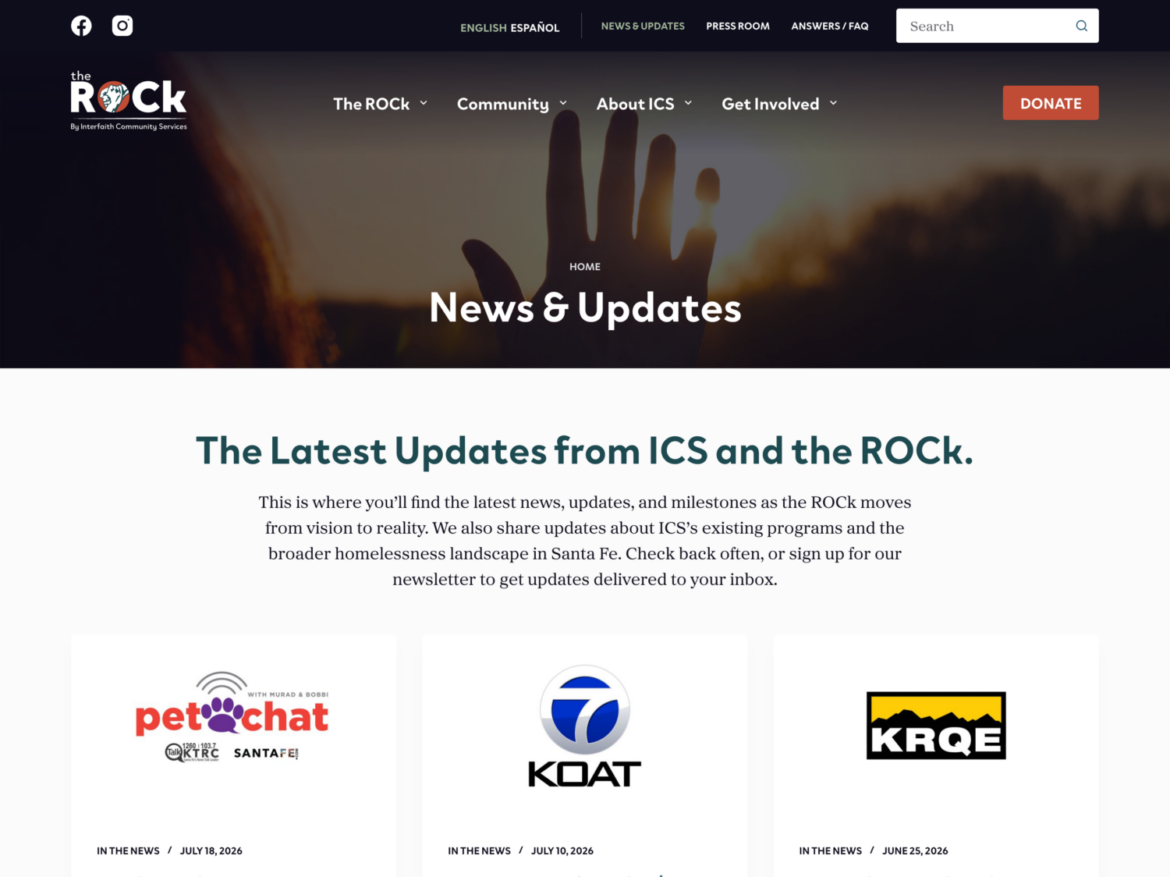
The news archive earns more of its keep than a press page usually does. Seventeen In the News posts cover a year of local coverage from KOAT, KRQE, the Santa Fe New Mexican, the Santa Fe Reporter, and KTRC radio segments, each one written up from its original source rather than republished, and verified against it, with correct dates and categories. For a contested project, a reporter or a skeptical neighbor arriving cold can read the actual record in one place instead of assembling it from search results.
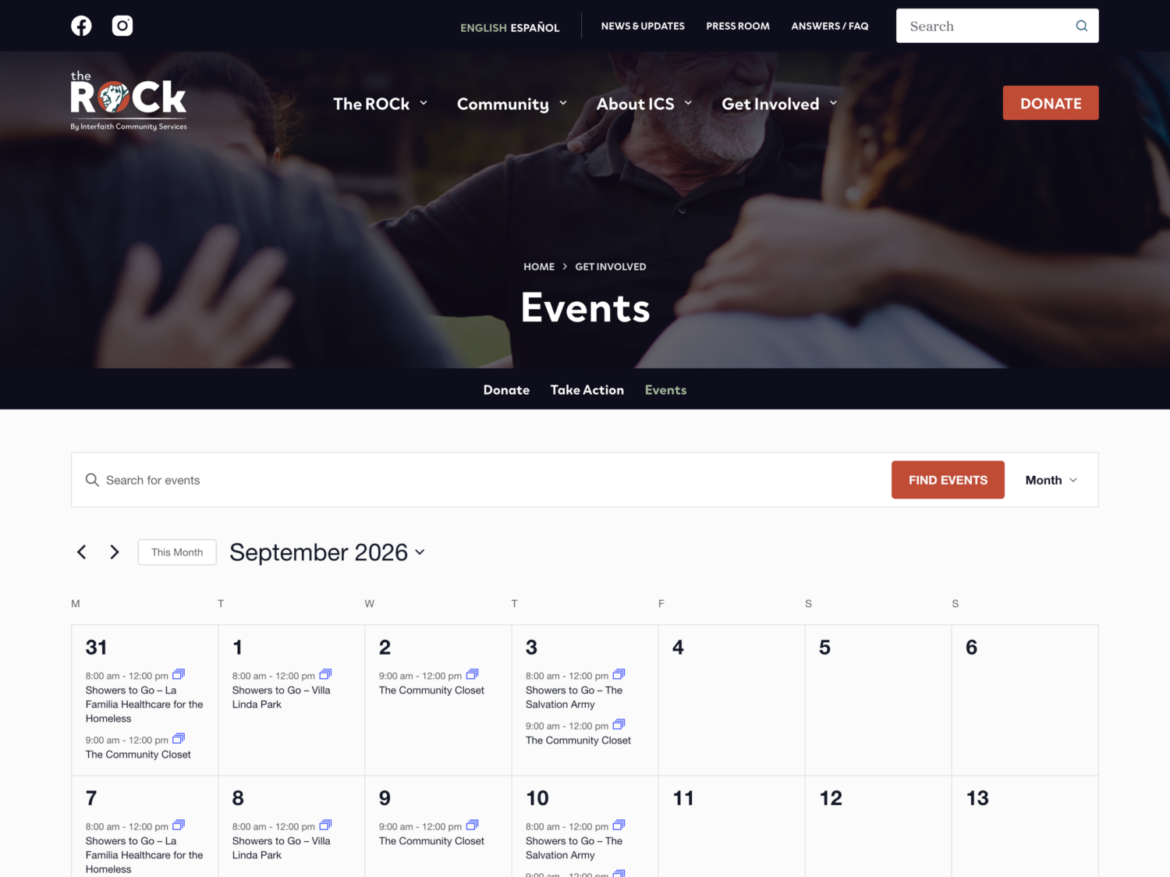
Events works the same way, as a service surface rather than an announcements page. The calendar carries 11 series totaling 654 occurrences, assembled from a spreadsheet, a stack of flyers, and a Word document, then fact-checked against third-party sources. Many of those entries are recurring services, mobile showers and the community closet among them, so the calendar functions as a way to find help on a given day.
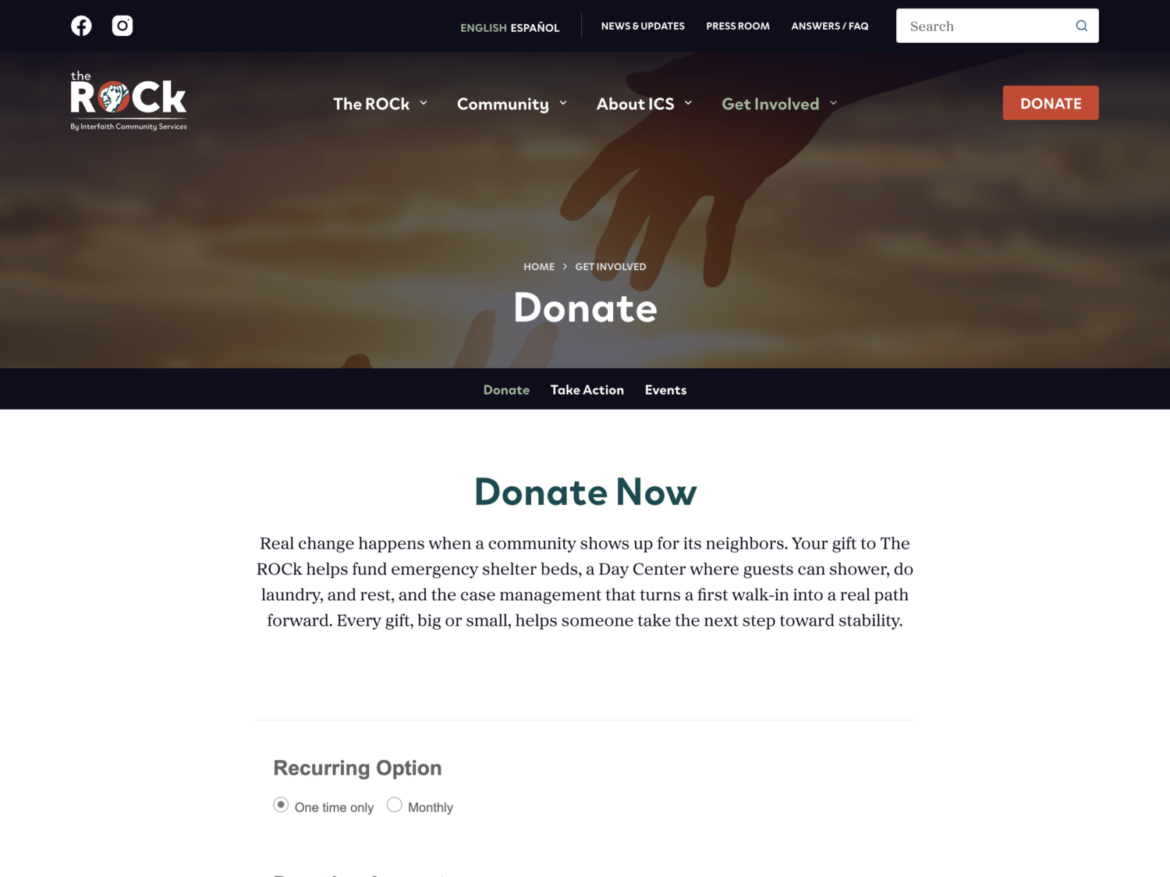
The donation pathway runs on Click & Pledge, using the embed method rather than the plugin, and it carries a dropdown letting a donor direct a gift to The ROCk or to general operations. That distinction matters for an organization running programs today while building for tomorrow. The form was stress-tested with real transactions and receipt emails before launch, and it keeps a CAPTCHA on purpose: card-testing attacks probe unprotected payment forms, and a nonprofit’s processor account is worth protecting.
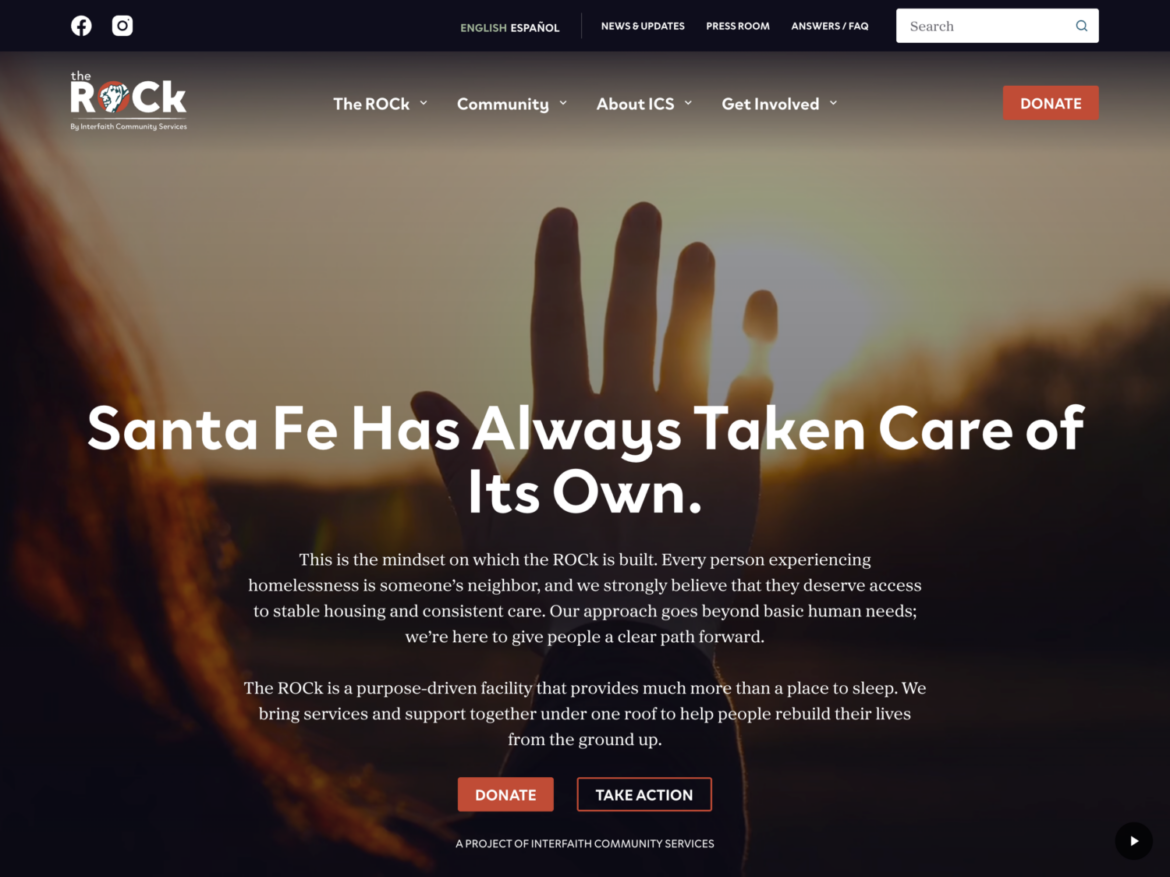
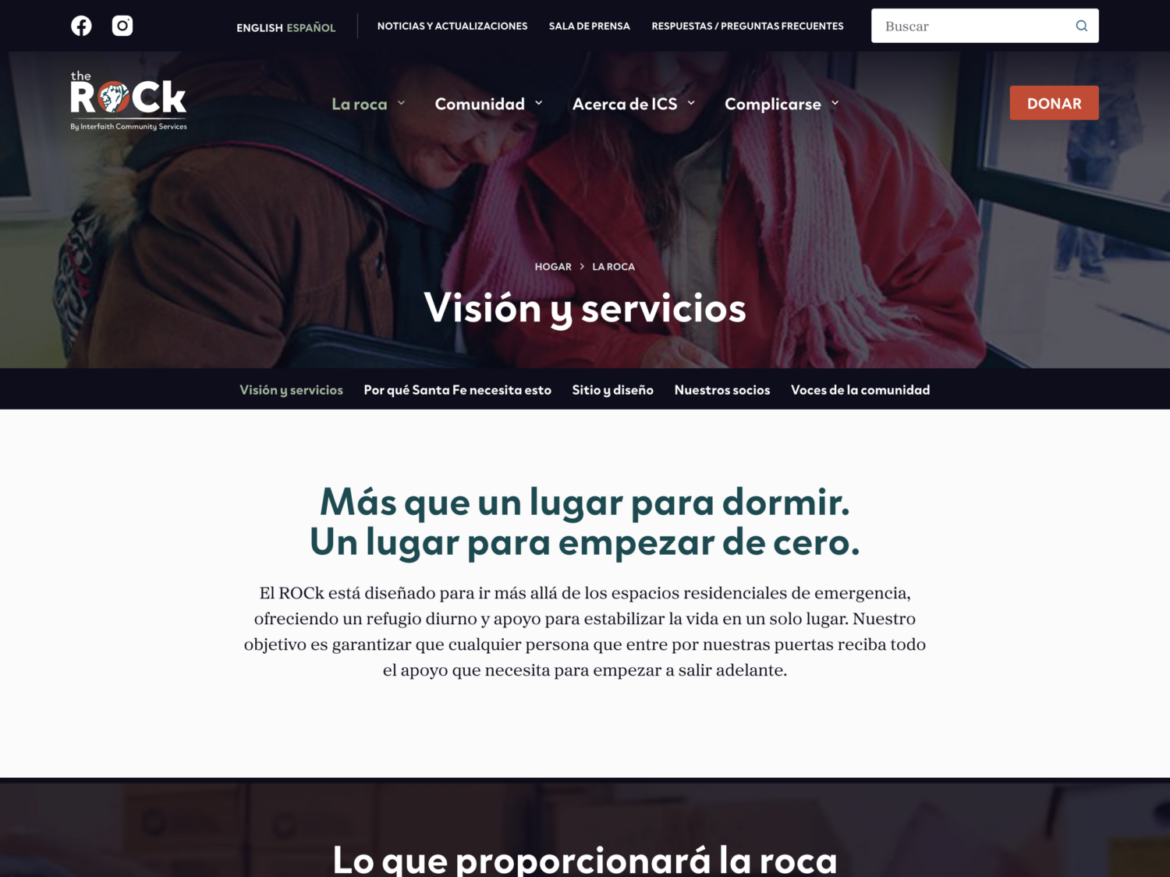
Accessibility ran as a real audit rather than a checkbox, for a reason specific to this client: an organization that serves people with disabilities cannot have a website that excludes them. That meant 124 automated scans across 31 URLs, in two browser engines at two screen widths, plus manual keyboard, reflow, reduced-motion, and state-contrast testing, then remediation to WCAG 2.1 AA, including a pause control on the homepage hero video. A browser-level Spanish toggle with auto-detect and cookie persistence shipped in the first phase as well.
Launch also meant moving to a new domain without breaking anything on the way. The legacy domain, interfaithsheltersf.org, now redirects to therocksantafe.org, front page and unknown paths alike, and the old site’s donate button is redirect-mapped straight to the new donation form rather than dropped on the homepage. Years of inbound links, press citations, and bookmarks keep working, and so does the donation path, which is the piece most redesigns quietly lose.
The first phase launched on the date the client set, donations are coming through the new form, and the ICS team edits the site themselves. For a project that has to keep making its case while it gets built, the useful outcome is not a finished website. It is that the people making the case now hold the controls.