
A sister brand is a brand that shares a surname with one or more other brands in the same family. Google + Android + YouTube. Greenbridge + Evergreen. Toyota + Lexus. The practical question every one of these families has to answer is the same: how do you make multiple brands feel related without making them feel identical? Recently, I spent some time working on a miniature version of that problem — three small public-facing sites I built for myself — and the lessons transferred straight into the way I think about multi-brand client work.
A ritual from Los Alamos that turned into three websites
Before I get to the design lessons, a quick origin. During my years at N3B Los Alamos — a Department of Energy contractor working under the Office of Environmental Management — every meeting opened the same way. Safety moment. Security moment. Ethics moment. Not once a quarter. Every meeting. The discipline was that these three values are not things you put on a poster and forget. You speak to them until they become how the team thinks.
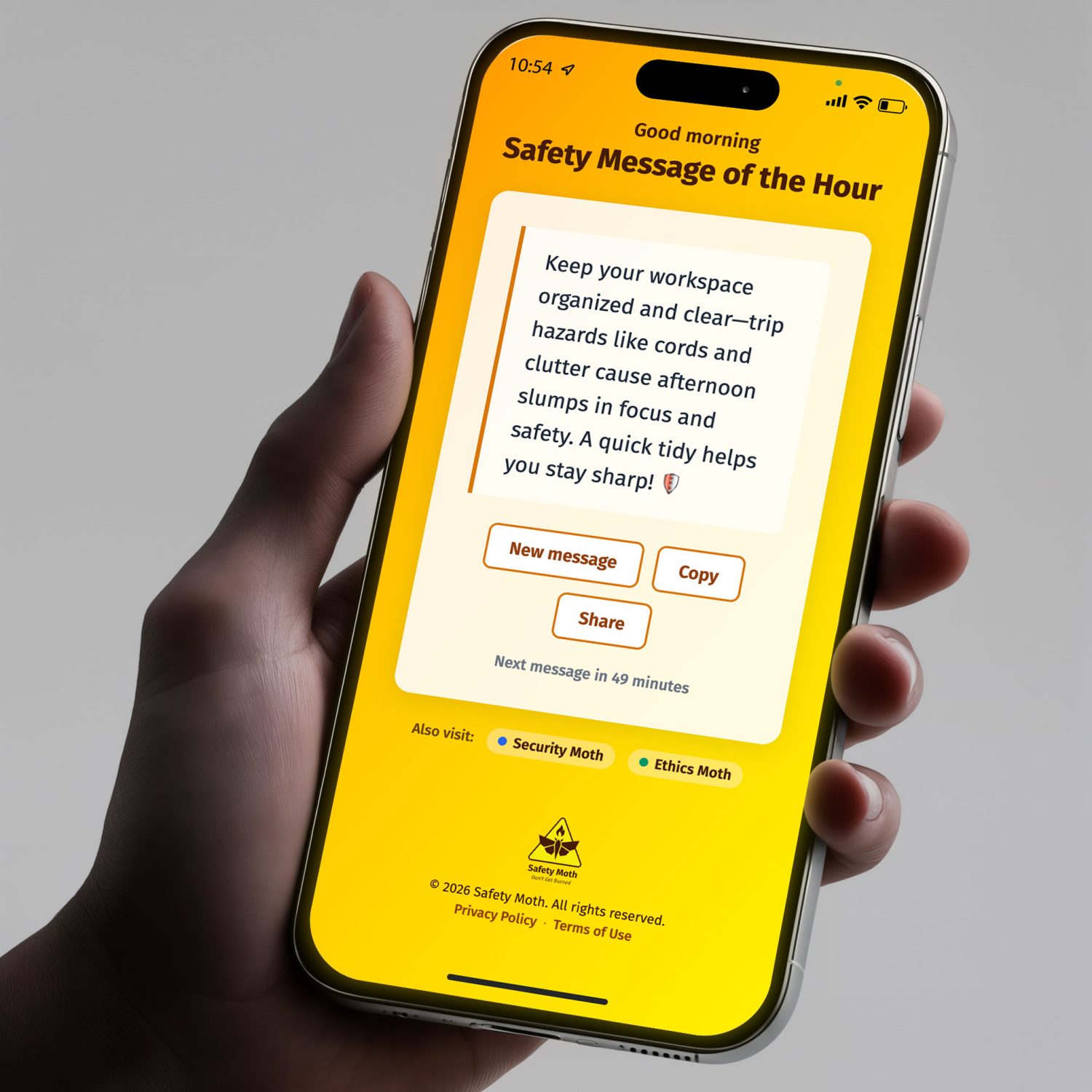
After I left, the habit stuck. I wanted a small, daily way to keep safety, security, and ethics top of mind — not just for myself, but for anyone who cared enough to visit. That turned into three sites: Safety Moth, Security Moth, and Ethics Moth. Each one does the same simple thing: it displays a fresh, AI-generated message on its theme, refreshed on a regular cadence. Visit any of them and you get a single, unavoidable thought for the next few minutes of your day.
Useful as they are individually, the interesting work was getting them to feel like a family.
The craft problem: same family, distinct faces
If the three Moth sites had used the same color, the same mascot, and the same voice, they would have read as one brand in a trench coat — three themes pretending to be separate when everyone could see the seams. If they had used totally different visual languages, they would have read as three strangers with nothing in common. The Moth in the name only gets you partway there. The brand system has to do the rest.
Four moves did most of the work.
- A shared naming formula. Every site is “[Theme] Message of the Hour.” Identical rhythm, one-word swap. The shared structure tells a visitor who has seen one site that the others are its siblings before they even notice the design.
- A shared mascot, distinct treatments. The moth is the family surname. But each theme gets its own visual character — a different accent color, a slightly different feel in how the moth is rendered. Close enough to be recognizable, different enough that you never confuse Safety Moth for Ethics Moth at a glance.
- An identical structural skeleton. One message, one Copy button, one countdown timer. Same page, same interactions, same rhythm across all three. That skeleton is the strongest signal of “same family” — stronger than any logo or color.
- Explicit cross-links in the footer. Every site links to the other two. Nothing signals “family” faster than a brand admitting its relatives exist. It also turns three sites into a tiny ecosystem where a visitor can walk from one to the others without thinking about it.
None of these moves is revolutionary. All of them are disciplined. The discipline is what makes the family feel coherent — and what makes the same pattern work at much larger scales.
What does a sister-brand system actually require?
For most businesses with more than one product line or sub-brand, a sister-brand system needs four things to hold together: a shared visual anchor (mark, color, or typographic element) that is consistent enough to read as family; a distinct variation on that anchor for each sibling so they do not blur into each other; a shared structural or experiential pattern (layout, tone, interaction model) that makes the brands feel related even when the details differ; and explicit acknowledgment, somewhere visible, that the relatives exist. Skip any one of those and the family falls apart. Nail all four and it reads as intentional from the first impression.
The same problem at bigger scale
The four moves that held the Moth sites together are the same ones I reach for on much larger engagements. The Greenbridge rebrand is the clearest enterprise example in my recent work: Greenbridge is a multi-billion-dollar manufacturer of industrial strapping, and Evergreen was its recycling and circular-economy arm (they’ve since divested) — two distinct businesses under one roof that had to read as one family across an extensive product catalog, a rebrand-era website, and a full stationery system. The moves were the same as Moth, just at a larger scale: a shared mark and color system, distinct variations for each line, an identical structural approach to how products are merchandised, and intentional cross-referencing between the two brands wherever a visitor might be looking at one without the other in sight.
What Moth taught me, in miniature, was how much weight the structural pattern carries in a multi-brand system. The logo and color work is what clients notice first. The interaction patterns, naming rhythms, and cross-linking are what make a family feel like a family over time.
Why side projects belong in a design practice
I did not build Moth as a case study. I built it because the habit from N3B was worth keeping, and because I wanted a small reason to return to the same values every few minutes of the day. But the side benefit turned out to be significant: three sites, built quickly with no client timeline, gave me a compressed working example of every sister-brand decision I make on larger projects. Small problems with the same shape as large problems are the best kind of practice a designer can get.
If you are weighing a multi-brand system
Patrick Iverson has been building brand identities and brand systems for businesses across New Mexico — Santa Fe, Albuquerque, Rio Rancho, Las Cruces — and the rest of the country since 2001. If your business is juggling more than one brand, or getting ready to launch a sister line, we are happy to talk through it. Bring what you have — even a rough sense of the relationship between the brands is enough to get started. The discipline to hold a family together is knowable, and the sooner you apply it, the less expensive it is to get right.