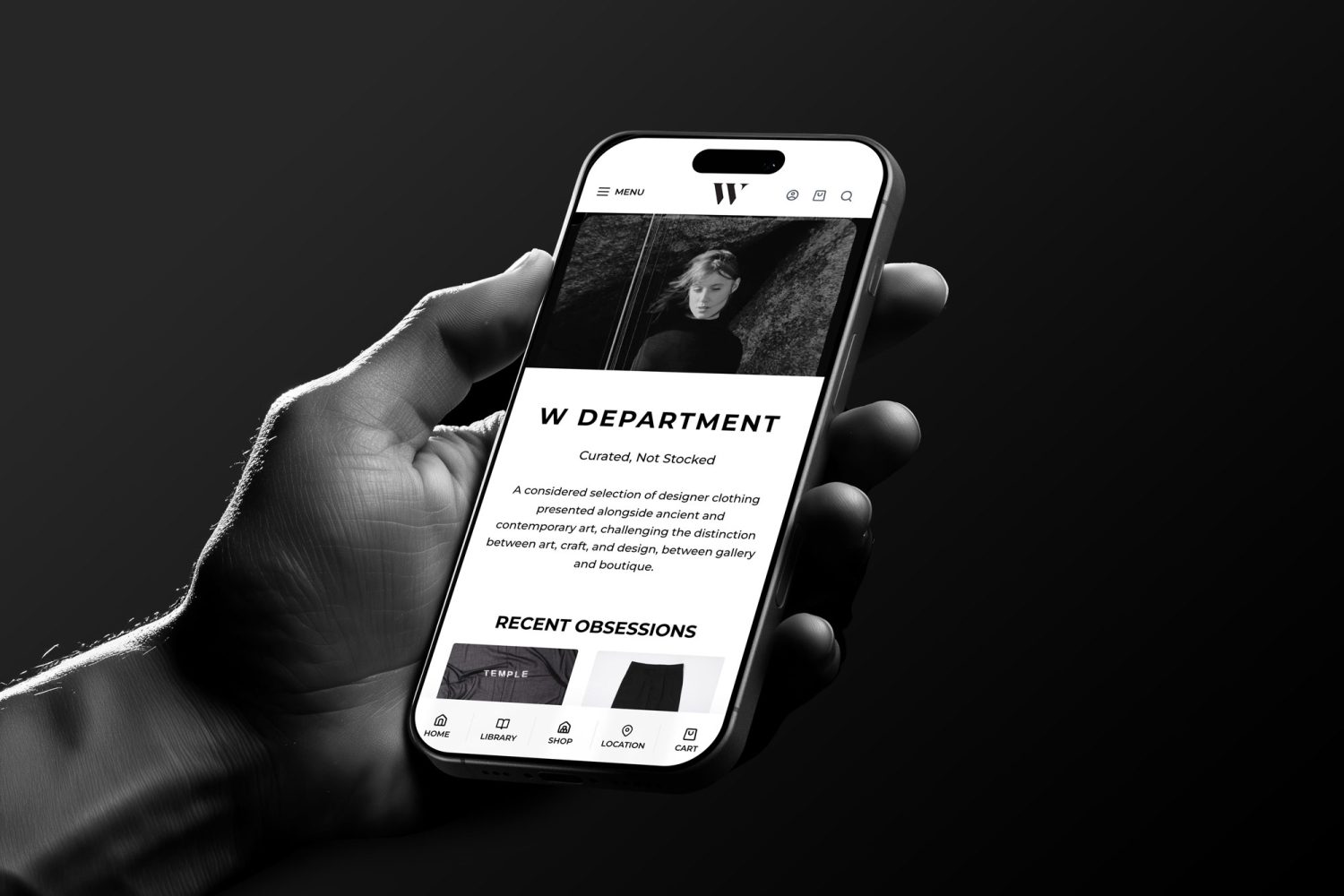
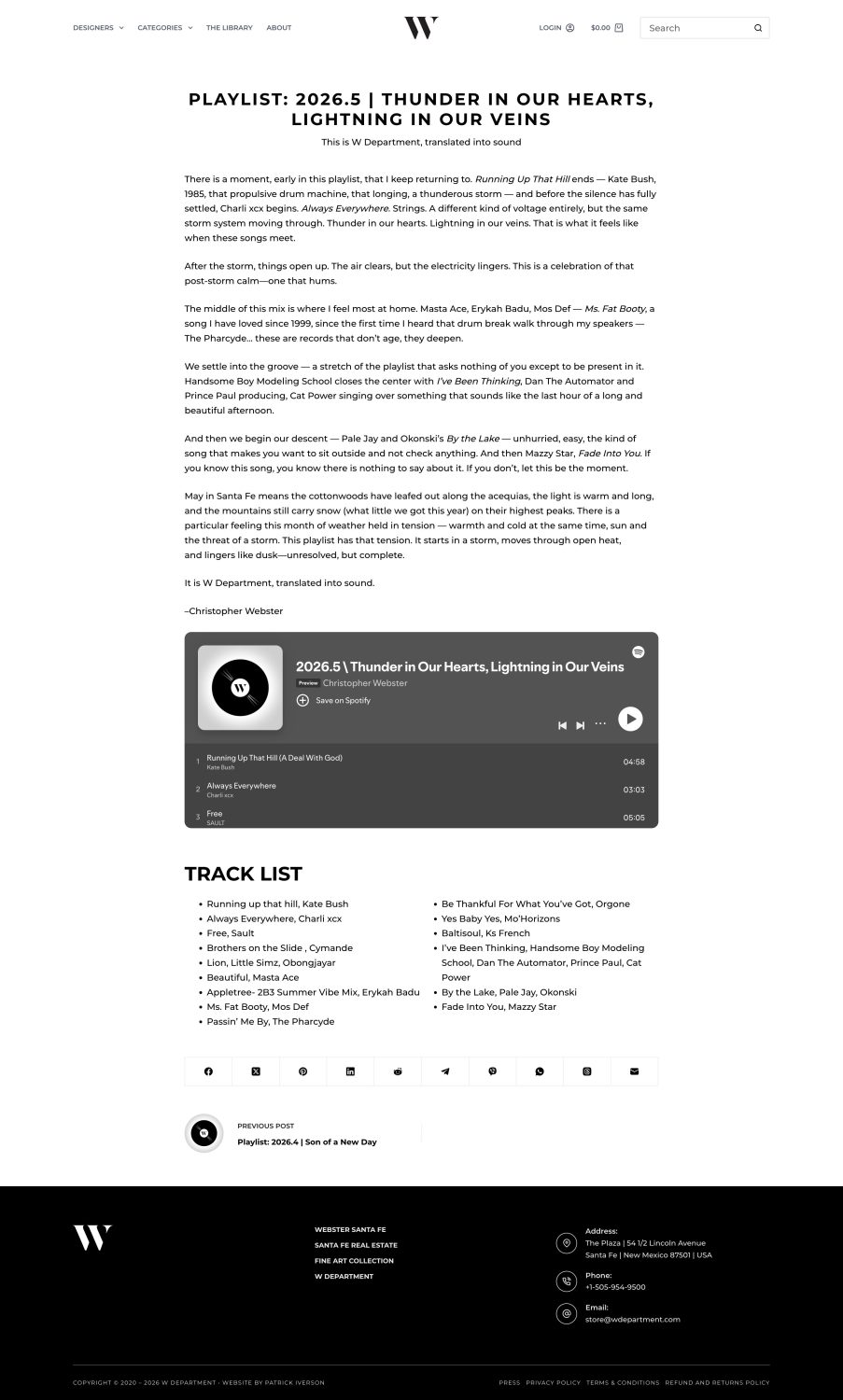
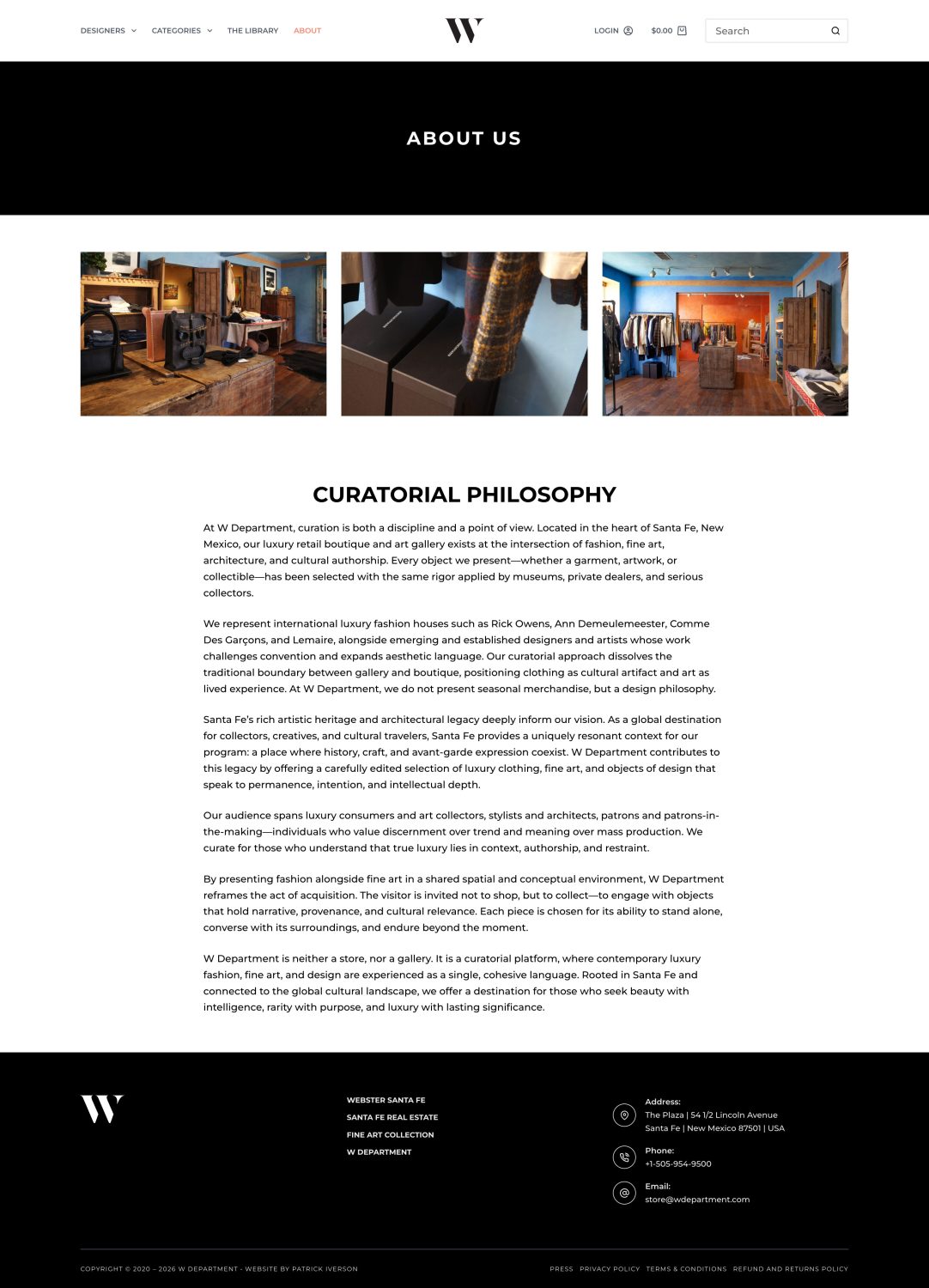
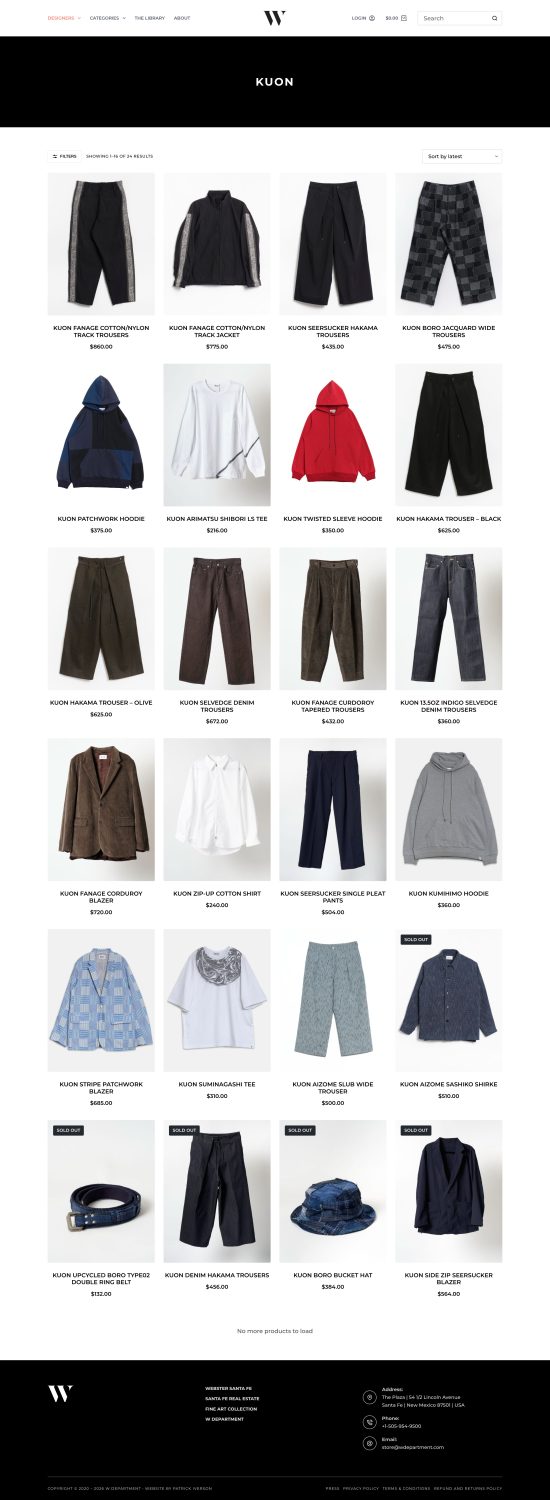
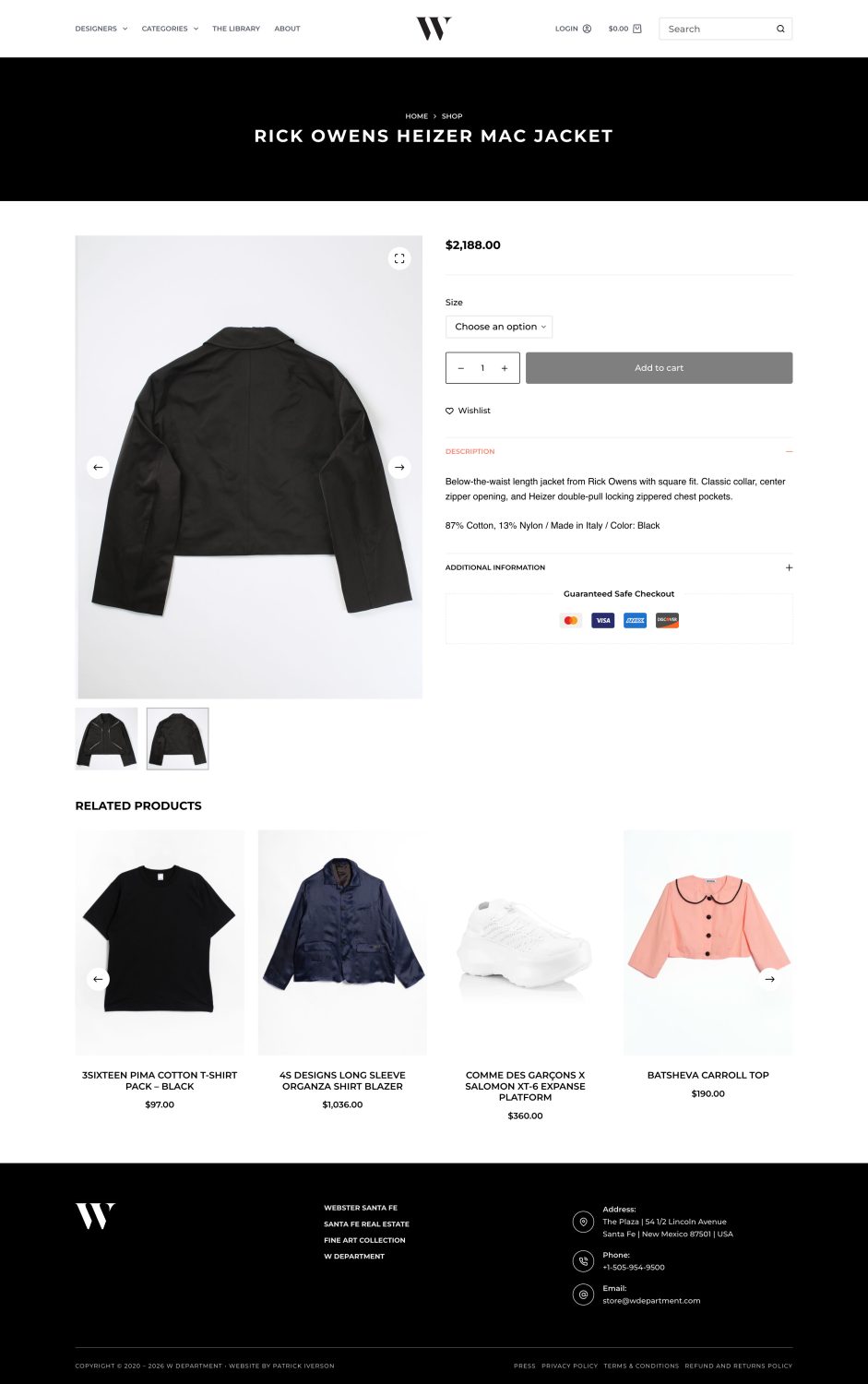
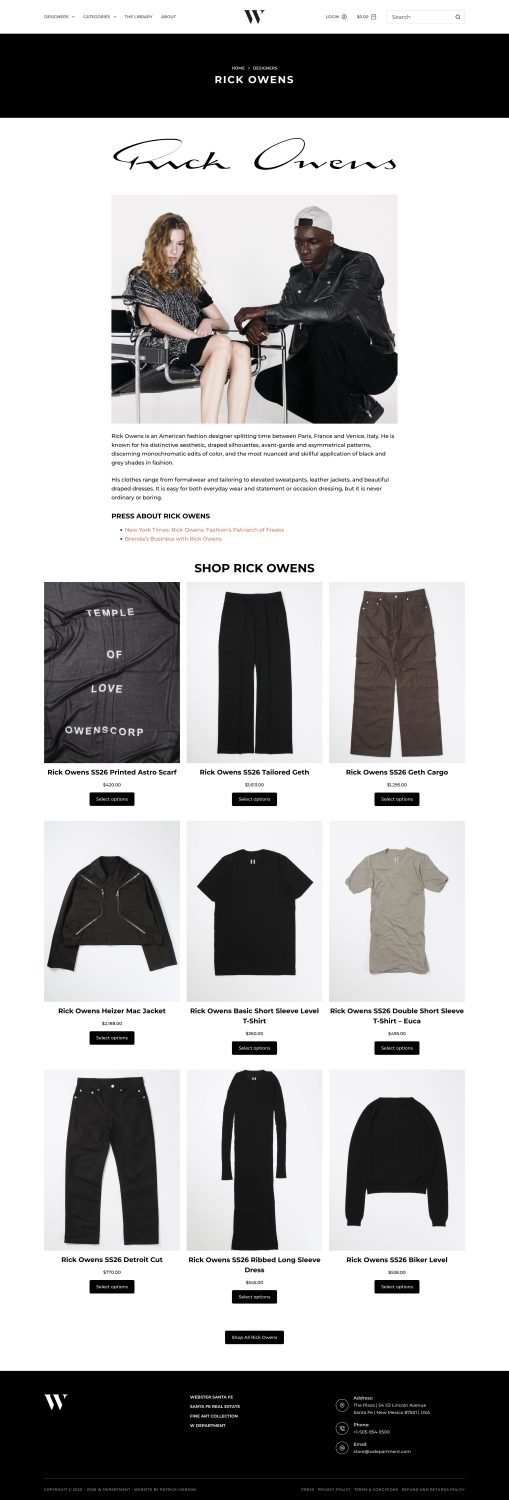
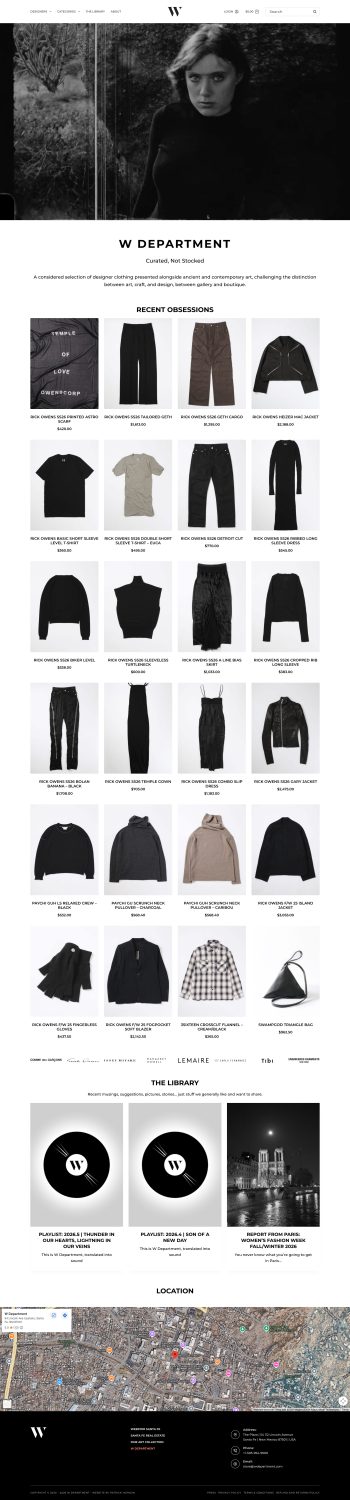

For W Department, a Santa Fe boutique carrying a tightly curated selection of designer clothing and art from houses including Issey Miyake, Comme des Garçons, Rick Owens, Margaret Howell, Ann Demeulemeester, Lemaire, Engineered Garments, Carla Fernandez, and Tibi, I designed and developed a custom WordPress and WooCommerce site that had to read as a serious editorial boutique on the surface and operate as a real retail business underneath. A boutique website tells you what kind of store this is in the first ten seconds. A working retail website does that and also keeps inventory accurate, gets people through checkout, and feeds a marketing engine that brings them back. Both jobs had to be carried by a single build.
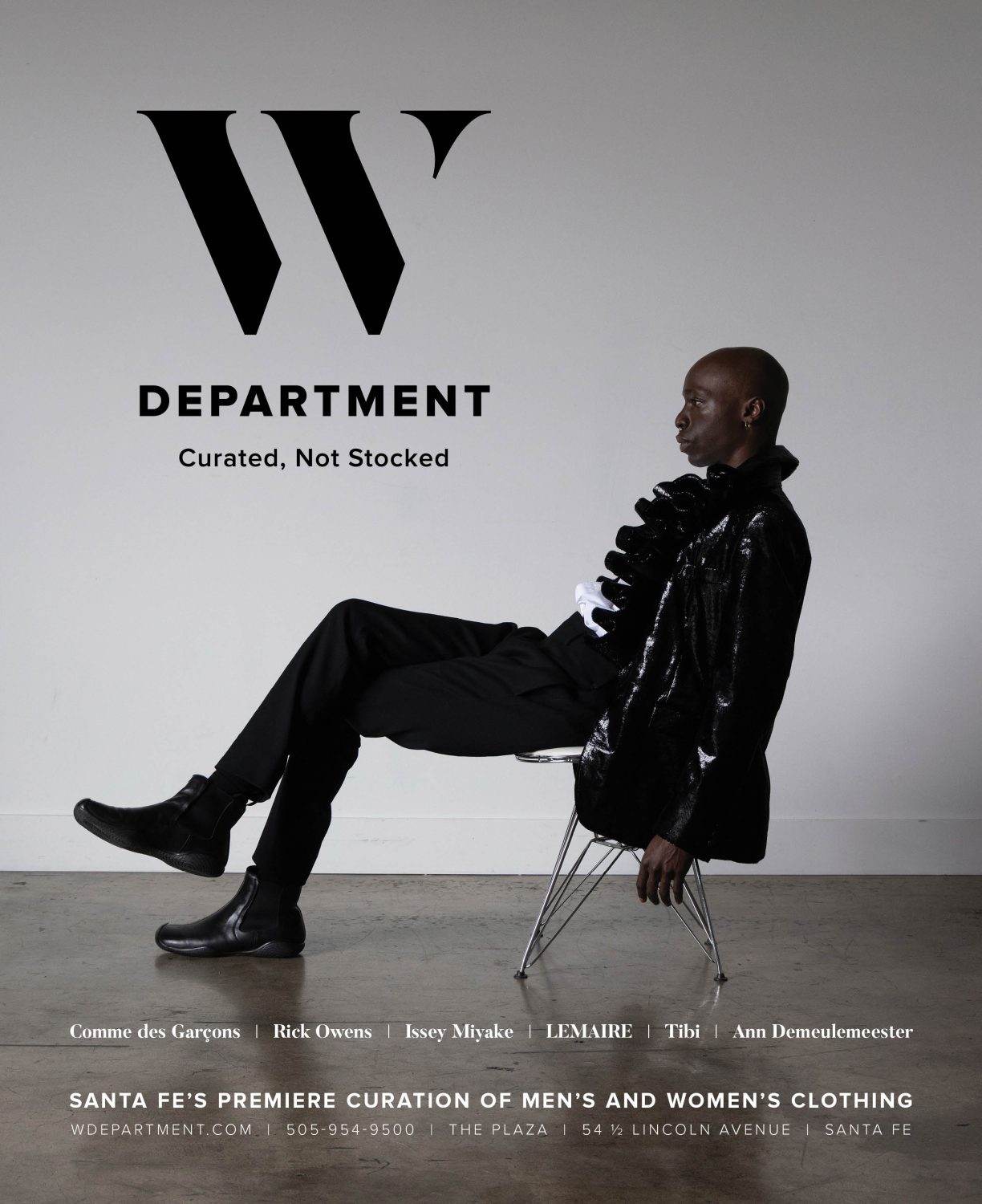
The website is the central piece of a longer-running creative engagement. I also designed the W Department logo and visual identity, and I continue to design the store’s advertising and seasonal marketing — the digital and print pieces that carry the same restraint and editorial voice into the rest of the brand’s presence. The case study here focuses on the website build, but the typographic system, color discipline, and editorial sensibility were developed across the broader identity and applied consistently across every surface of the brand.
The challenge was that nothing about the assignment was generic. A curated boutique cannot be served by a stock e-commerce theme — the typography, image rhythm, and merchandising logic have to feel like the store itself. At the same time, the site had to be deeply integrated with the operational systems behind a working retail business: a point-of-sale, a marketing platform, a content system the staff could actually run, and a search index that would surface designer names and product categories the way customers actually search for them. None of that comes out of a box.
I built a heavily customized WooCommerce store on top of a custom WordPress theme. Designers, product tags, and editorial content are organized through a combination of custom post types and custom taxonomies so the merchandising logic matches how the buyers actually think about the inventory rather than fitting it into WooCommerce defaults. Designer pages, product-tag archives, the Library, and the Press section are all driven by the same underlying structure, which keeps the front end coherent across very different kinds of content. Server-side performance was tuned aggressively — caching, image handling, query optimization — because a boutique site that loads slowly on a phone is a boutique site nobody comes back to.
Two integrations carry most of the operational weight. The store is connected to LightSpeed Retail for inventory sync, so the in-store register and the online catalog stay aligned without manual reconciliation — a buyer who walks into the shop on Lincoln Avenue and a customer browsing from across the country are working from the same source of truth. HubSpot powers the marketing layer, with site events and customer data flowing into segmentation, email, and lifecycle workflows that the team manages on their own. SEO was treated as part of the build rather than an afterthought: schema, structured taxonomy, meta templates, internal linking, and image accessibility were all designed in from day one so the site shows up well for both search engines and large language models that surface store recommendations.
The result is a website that does what a boutique website should do — feels like the store, supports the team, and turns curiosity into a transaction without friction — and that does the much less visible work of keeping inventory, marketing, and search performance in sync behind the scenes. For a curated retailer whose strength is selecting one well-edited shelf rather than stocking ten, the website is the digital version of that same edit, presented with the same care and run on the same operational discipline.