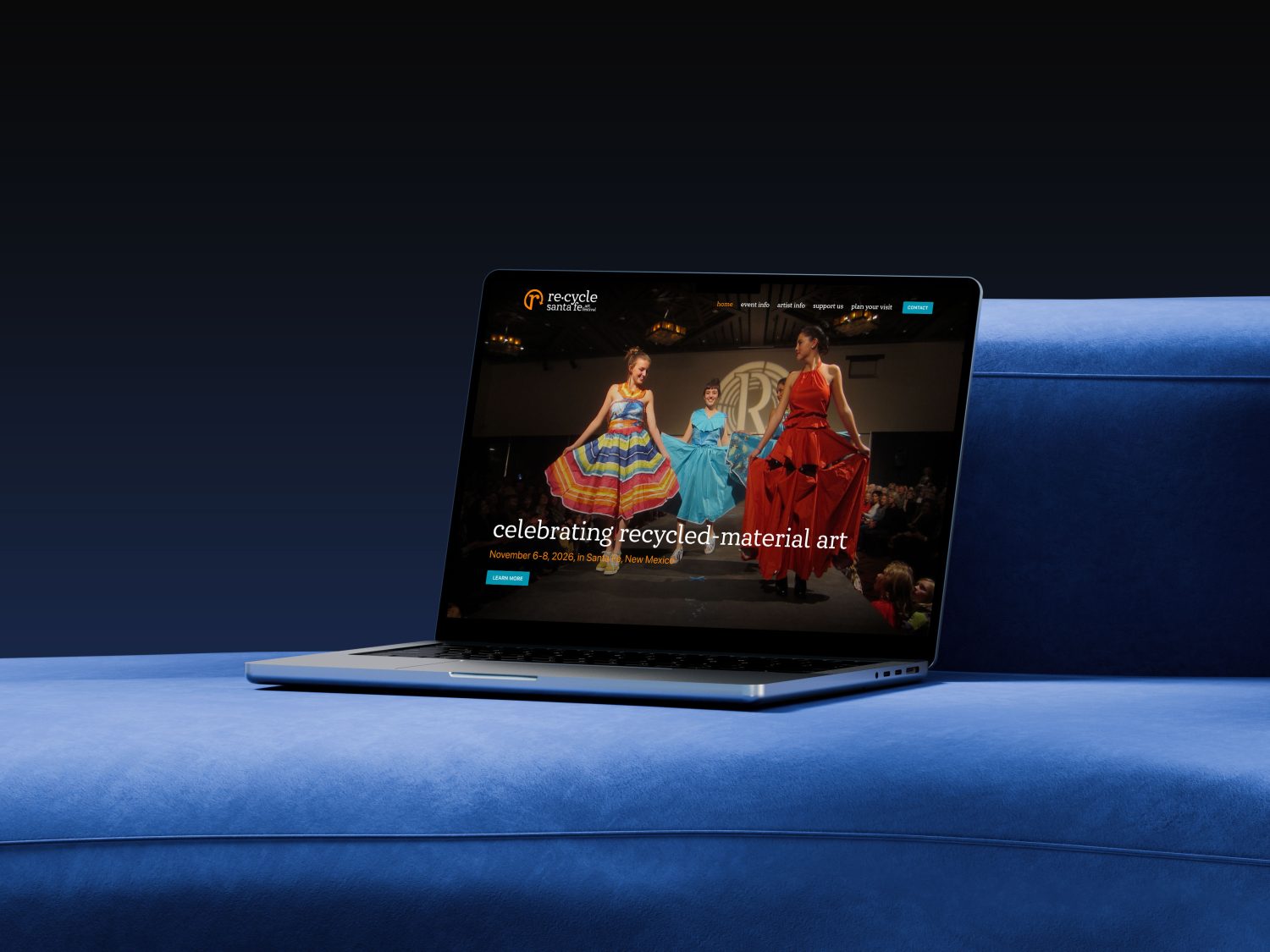
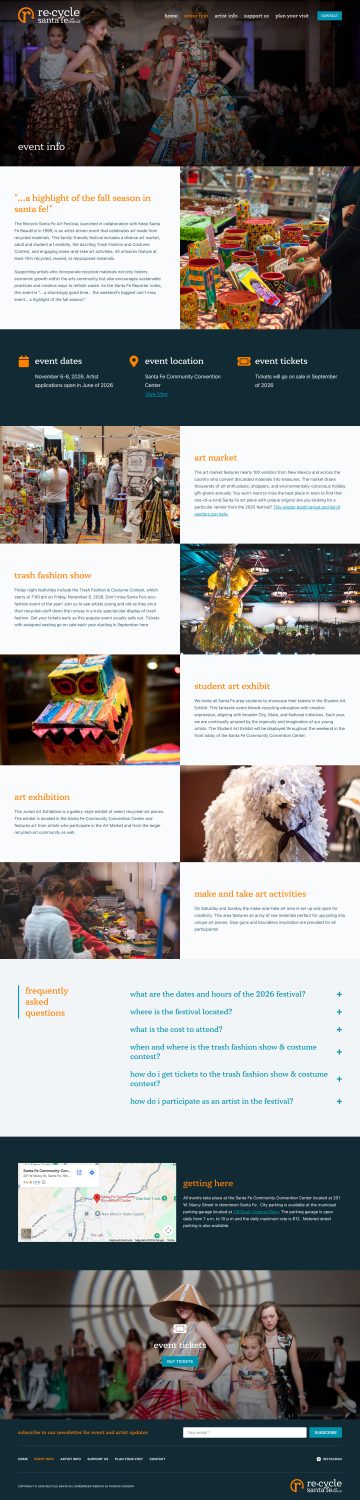
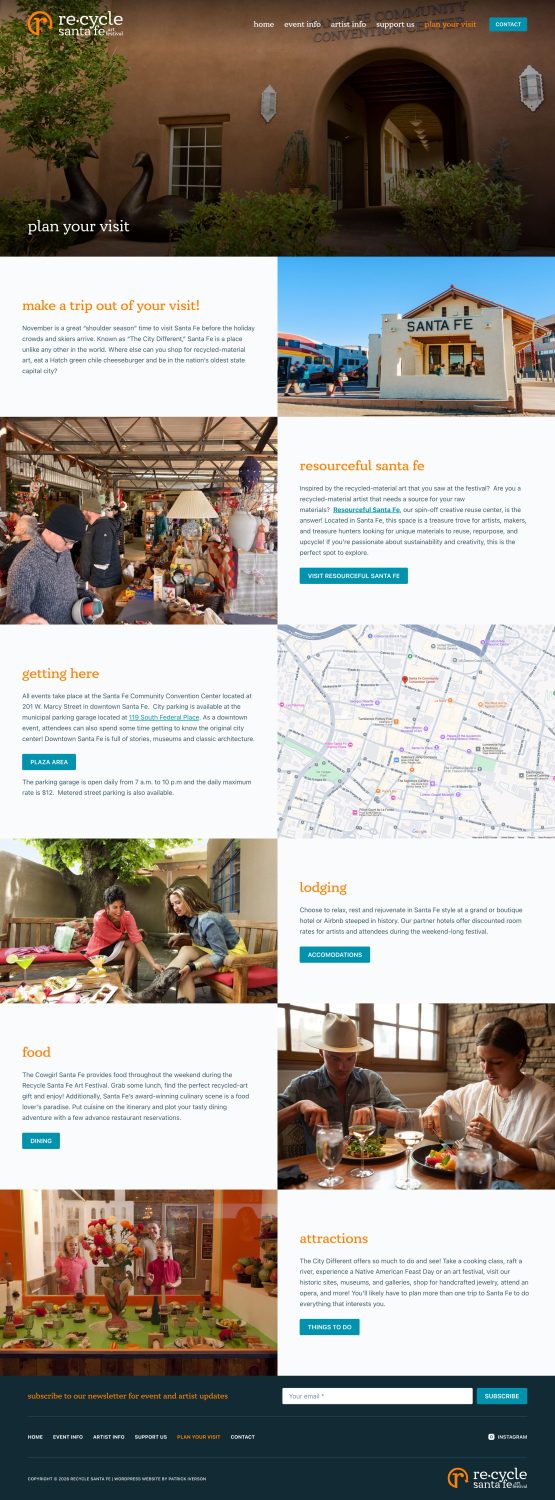
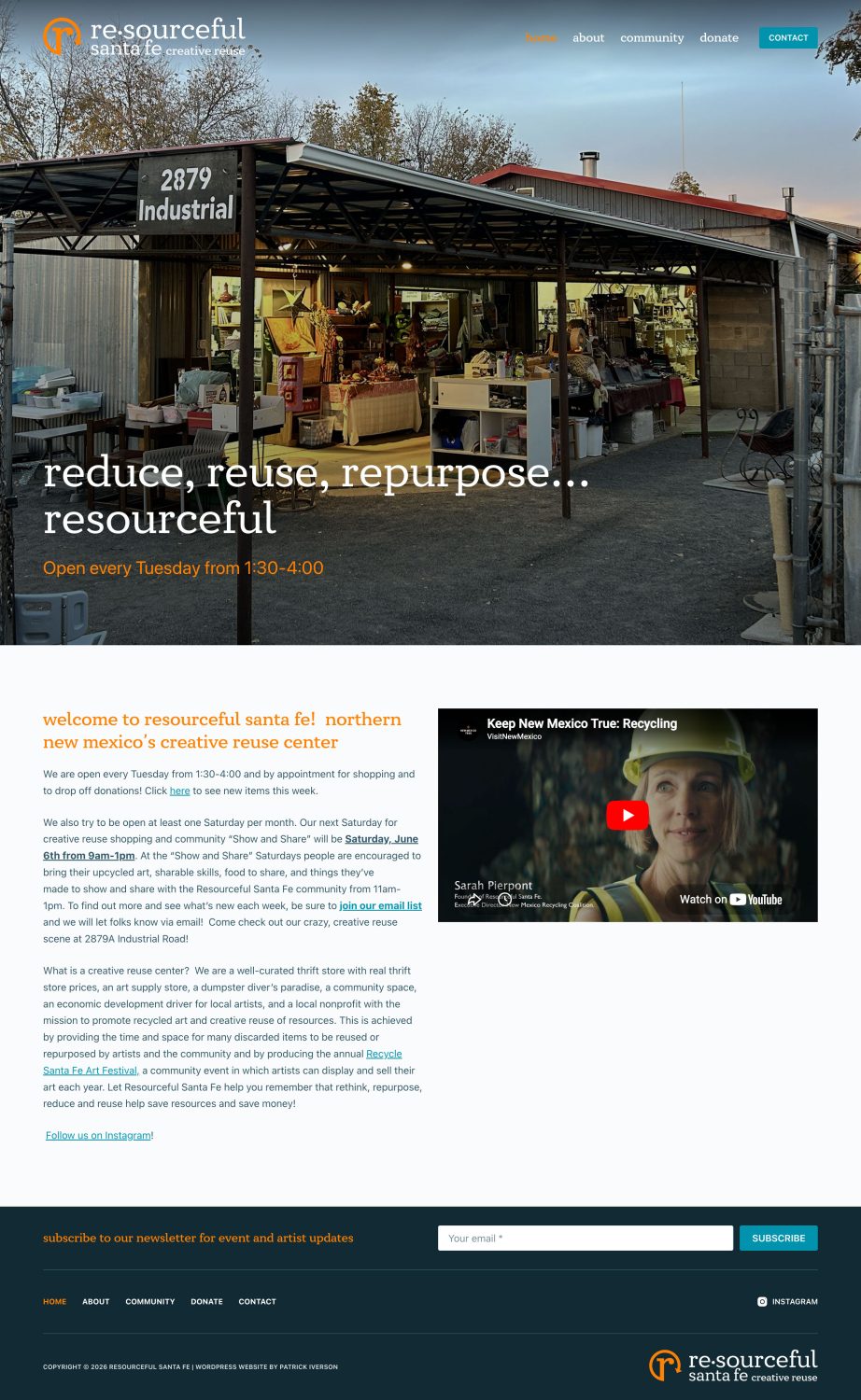
Recycle Santa Fe is the country’s oldest and largest recycled-art festival, a three-day event each November where artists turn what would have been trash into work people actually buy. Resourceful Santa Fe is its year-round companion — a creative-reuse storefront and education space on Industrial Road that Sarah Pierpont opened in 2020 when COVID canceled that year’s festival and left her organization without its anchor weekend. Two programs, one mission: keep usable material out of the landfill, in the hands of artists, and in the conversation about how Santa Fe handles waste.
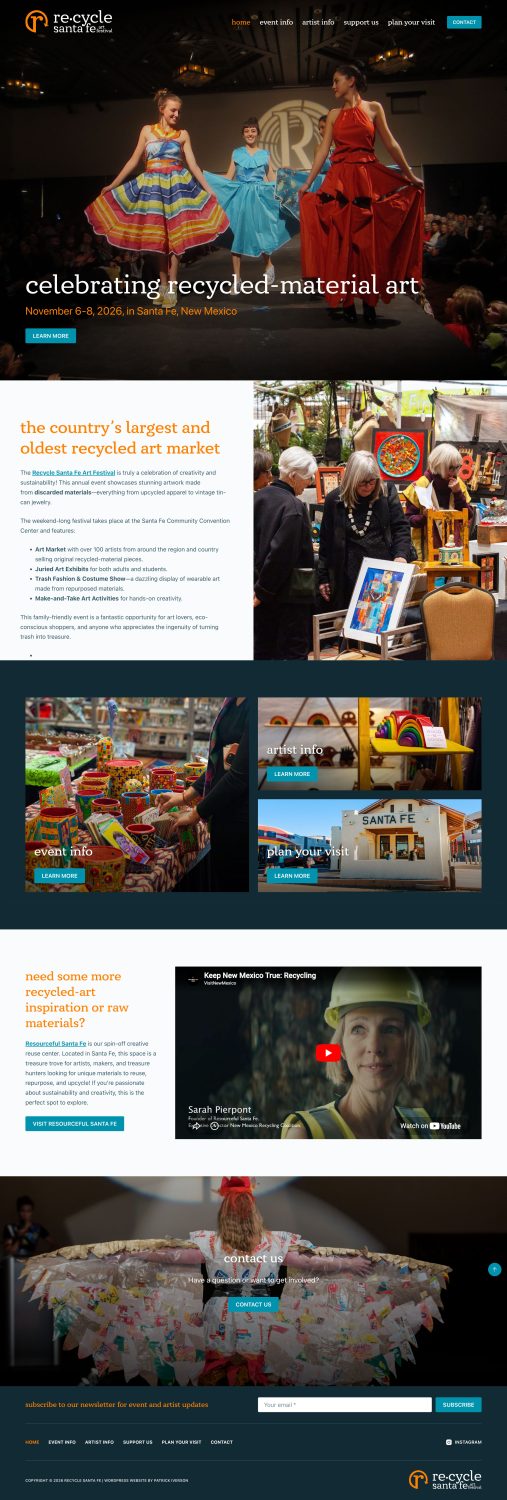
I refreshed both sites in sequence — Recycle Santa Fe first, then Resourceful Santa Fe a few months later — implementing identities Cisneros Design created. Both sites run WordPress, with each site getting its own forked child theme so the two surfaces could share a common foundation while expressing distinct personalities. Recycle Santa Fe leans into the festival’s collage-and-cardboard aesthetic, with bold typography, dated event content, and the practical logistics of a three-day program at the Convention Center. Resourceful Santa Fe leans calmer: store hours, drop-off guidelines, classes, the steadier rhythms of a brick-and-mortar that’s open year-round.
Forking the child theme made it possible to keep the technical decisions in lockstep — theme, plugin set, custom blocks, performance settings — while letting each site evolve its own identity at the surface. When the festival site needs an update specific to a year’s program, the Resourceful site isn’t pulled along for the ride. When something foundational changes (a theme update, a security patch), both sites stay in sync because they started from the same base.
Both projects replaced earlier sites that had grown brittle. Sarah and her team needed publishing patterns they could maintain themselves — editing event pages, adjusting hours, updating drop-off rules — without filing a ticket every time. The block editor does most of that work; what’s left fits in a short documented playbook.
The two sites now operate the way the organization does: separate stages for separate audiences, but you can tell they came from the same people, working on the same problem.